


Chill Cube Review for Off-Grid RV Air Conditioning
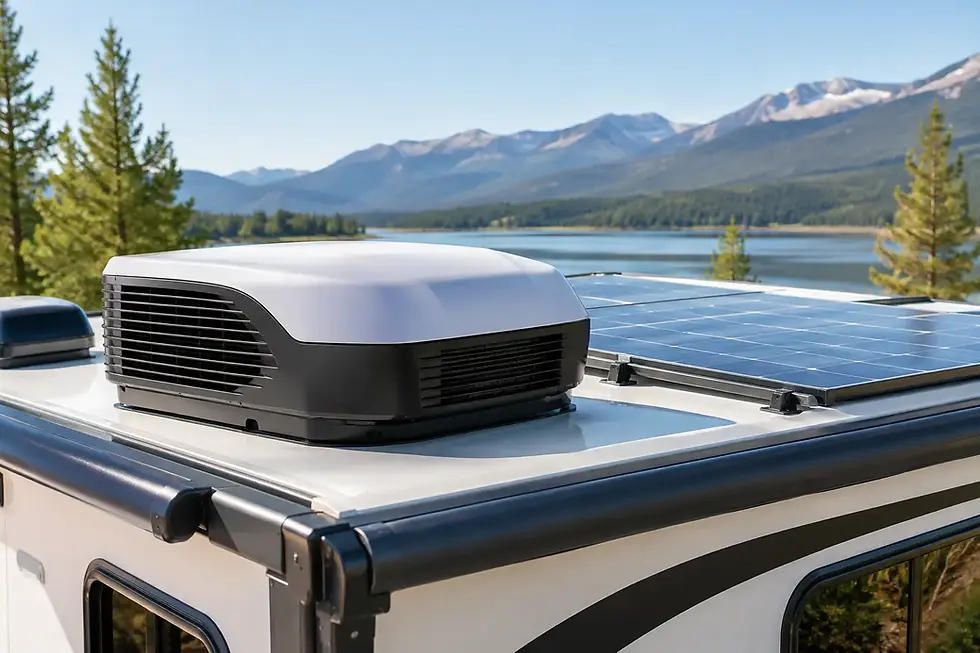
A rooftop air conditioner can be the component that decides whether an RV electrical system feels truly capable or forces you back to hookups by midafternoon. This Chill Cube review looks at the Furrion Chill Cube from the perspective that matters to solar-equipped RV owners: not just whether it blows cold air, but what it asks of your batteries, inverter, roof, and travel plans.
The short version is encouraging. The Chill Cube’s variable-speed design can make air conditioning more realistic for an off-grid setup than a conventional fixed-speed rooftop unit. It is not a shortcut around system design, though. If your goal is to cool the coach while parked away from hookups, the right answer depends on your climate, floor plan, insulation, battery bank, solar harvest, and how long you expect to run the AC.
What Makes the Chill Cube Different?
Most traditional RV air conditioners use a compressor that starts hard, then cycles on and off at full output. That startup event is often the toughest moment for an inverter and battery bank. It can require a large surge of power even before the unit settles into its normal operating draw.
The Furrion Chill Cube uses variable-speed compressor technology. Rather than treating cooling as an all-or-nothing job, it can adjust operation as the cabin’s cooling demand changes. In practical terms, that can mean a gentler startup, steadier operation, and less power wasted by repeated full-speed cycling.
That distinction matters most when you are relying on stored energy. A lower startup demand may allow an appropriately designed inverter system to start the air conditioner without adding a separate soft-start device. It may also reduce the sharp voltage drop that can make a marginal battery bank unhappy. But “may” is the key word. The result still depends on the installation, battery condition, cable sizing, inverter capability, and everything else sharing the electrical system at that moment.
The Chill Cube is also designed with quieter operation in mind. For travelers who work remotely, nap during the heat of the day, or simply prefer a calmer campsite, a less abrupt compressor sound is a meaningful comfort upgrade. Sound levels are subjective, however. Roof construction, interior ducting, fan setting, and how much the unit must work in direct sun all affect what you hear inside.
Chill Cube Review: The Off-Grid Reality
The Chill Cube is a strong candidate for an RV that spends real time away from shore power, but it should be treated as part of a complete energy plan. A high-performance AC cannot overcome an undersized battery bank, weak solar input, or an inverter that is already working near its limit.
Start with the distinction between startup power and running power. Variable-speed cooling can reduce the drama of startup, which is valuable. Once the unit is running, though, it still needs meaningful energy to remove heat from an RV sitting in summer sun. Running the air conditioner for a short cooldown is a very different goal from holding a comfortable temperature through an entire hot afternoon.
Battery capacity is the foundation. Lithium batteries are particularly well suited to air-conditioning loads because they can provide high current with less voltage sag than many older battery types. Even so, capacity should be planned around usable energy, not a hopeful estimate. The air conditioner is only one load. Refrigeration, fans, lights, water pumps, electronics, cooking appliances, and inverter standby draw all take their share.
Solar helps replenish what cooling uses, especially during clear, sunny weather when the AC is most needed. Yet solar output is never a fixed number. Panel angle, shading, roof space, season, clouds, and heat all change daily production. A system that handles several hours of afternoon cooling in Arizona may have a very different outcome in a humid, tree-covered campground in the Southeast.
For overnight comfort, solar is no longer producing. That is where a properly sized lithium bank becomes especially important. If nighttime air conditioning is a priority, it needs to be stated clearly during system planning. It changes the entire energy budget.
The Questions to Answer Before Installing One
A Chill Cube installation begins with the RV, not the air conditioner. Roof fit and ceiling configuration need confirmation first. Many rooftop AC replacements use familiar roof opening dimensions, but the ceiling assembly, control setup, ducted or non-ducted layout, and wiring arrangement still need to match the equipment being installed.
Next, look at the rig’s cooling load. A compact, well-insulated travel trailer in partial shade has a very different demand than a large motorhome with tall ceilings, multiple slide rooms, and broad areas of glass. Humidity matters too. In humid conditions, occupants often need the AC to run longer for comfort because the system is removing moisture as well as heat.
Then assess the electrical system honestly. Useful planning questions include:
How large is the existing lithium battery bank, and how much of its capacity is truly available?
What inverter is installed, and what continuous and surge output can it support?
How many solar panels fit on the roof, and how much energy do they typically produce while traveling?
Will the AC run while driving, at lunch stops, for a few hours after setup, or through the night?
Are there other heavy loads, such as an electric water heater, microwave, induction cooking, or residential refrigerator, that may operate at the same time?
Those answers determine whether the Chill Cube is an easy fit, a component of a larger upgrade, or simply not the best match for the way you camp. A good installation plan also considers shore-power use and generator operation, so the AC behaves predictably in every mode instead of working well only under ideal conditions.
Where the Chill Cube Makes the Most Sense
This air conditioner is especially appealing for RVers who value quieter cooling and want to reduce the electrical burden of traditional rooftop AC. It is a logical option for full-timers, remote workers, and frequent travelers building toward more comfortable off-grid stays.
It can be an excellent fit for a rig that already has a capable inverter and lithium bank but struggles with harsh AC startup. It also makes sense during a broader electrical upgrade, when solar, batteries, inverter capacity, and charging sources can be planned together instead of added one piece at a time.
There are trade-offs. If you mostly camp with hookups and only run the AC occasionally, the variable-speed advantage may be less important than it is for someone who spends long stretches on public land or in remote campsites. If your RV has limited roof space, a small battery bank, or a modest inverter, installing an efficient AC alone will not create unlimited cooling capacity.
Likewise, one rooftop unit has limits in extreme conditions. Direct sun, poor window coverage, frequent door traffic, high humidity, and a large interior volume can push any air conditioner hard. Reflective window coverings, shade, vent management, and sensible thermostat settings still matter. Efficiency works best when the coach is not constantly gaining more heat than the system can remove.
Installation Details That Protect Performance
A clean installation is more than making the new unit look good on the roof. The roof opening must be inspected, sealed correctly, and secured without over-compressing the gasket. The interior assembly needs proper support and a tidy wiring path. Electrical connections need the right wire size, protection, and termination quality for the loads involved.
For solar-equipped RVs, the AC should be tested in the conditions it will actually see. That means confirming inverter operation, monitoring battery voltage under load, and checking whether other common appliances can run without causing nuisance shutdowns. A remote monitoring system becomes very useful here because it shows the real energy picture instead of leaving you to guess from a battery percentage.
At Power Up RV Solar, that requirements-first approach is the point. The best AC upgrade is not the one with the most impressive label. It is the one that works cleanly with your roof layout, electrical system, travel habits, and expectations for time away from hookups.
The Chill Cube deserves consideration if quieter, more battery-friendly cooling is part of your plan to cut the cord and go explore. Just make the decision with a complete load calculation in hand. When the AC, inverter, lithium bank, solar array, and daily routine are designed as one system, a hot campground feels a lot less limiting.


Comments