


Is a Lithium Battery Upgrade for RV Worth It?
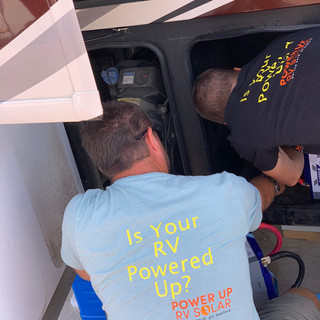
A lithium battery upgrade for RV travel changes more than the battery compartment. It changes what a quiet overnight stop feels like: the refrigerator stays cold, laptops charge without a generator running, and the coffee maker does not become a reason to hunt for hookups. But lithium only delivers that freedom when the rest of the electrical system is ready for it.
Replacing lead-acid batteries with lithium is often one of the most meaningful upgrades an RV owner can make. It is also easy to under-plan. A battery bank that is too small, a converter that charges at the wrong voltage, or an alternator circuit without the right protection can leave a capable battery doing less than it should.
Why RV Owners Move to Lithium
Most RV lithium battery banks use lithium iron phosphate chemistry, often called LiFePO4. This chemistry is well suited to RV use because it provides usable capacity, stable voltage, and long cycle life without the routine maintenance associated with flooded lead-acid batteries.
The usable-capacity difference is where many owners first notice the benefit. Lead-acid batteries are happiest when they are not routinely discharged deeply. A lithium battery can generally supply a much larger share of its rated capacity without the same penalty. That means a 200 amp-hour lithium bank can provide substantially more practical energy than a similarly rated lead-acid bank.
Lithium also holds voltage better as it discharges. In practical terms, lights stay bright, water pumps run confidently, and an inverter has a better chance of supporting appliance loads without shutting down from low voltage. For full-time RVers, remote workers, and campers who prefer public lands or quiet boondocking sites, that consistency matters.
Weight is another consideration. A lithium bank can reduce battery weight considerably, which is useful when managing cargo capacity. Still, lighter batteries are not the real reason to upgrade. The real advantage is having a power system designed around how you actually travel instead of planning every stop around an electrical pedestal.
Start With Your Energy Habits, Not Battery Size
The right lithium battery upgrade for an RV is not determined by a single popular battery size. It starts with your daily power use and the length of time you want to stay off-grid.
Consider what runs when you are not plugged in. Residential refrigerators, CPAP machines, laptops, televisions, water pumps, satellite internet equipment, coffee makers, microwaves, hair tools, and electric cooking appliances all affect battery capacity. Some loads use a small amount of power over many hours. Others pull a large amount of power for only a few minutes. Both matter.
Air conditioning deserves its own conversation. Running an RV air conditioner from batteries is possible with the correct combination of battery capacity, inverter output, solar input, and AC equipment. It is not the same as powering lights and a refrigerator overnight. A system intended to run a Furrion Chill Cube AC, for example, must be designed around startup demand, run time, weather, battery reserve, and the other loads that will be running at the same time.
Your camping pattern matters just as much. A weekend traveler who moves frequently can replenish batteries through solar, shore power, or driving. Someone parked off-grid for several days needs enough stored energy and enough charging capacity to cover poor solar weather. A remote worker may need dependable daytime power even when the campsite is shaded.
A useful planning question is simple: what do you want to run, for how long, and what is your backup plan when the weather does not cooperate? Honest answers lead to a system that feels dependable rather than barely adequate.
Battery Capacity Is Only One Part of the System
A lithium bank needs compatible charging sources. This is where a professional review can prevent expensive frustration.
Your shore-power converter or inverter-charger should have a lithium charging profile or settings that match the battery manufacturer’s requirements. A charger intended only for lead-acid batteries may charge too slowly, stop at the wrong voltage, or maintain a float setting that is not appropriate for lithium. Some older equipment can be configured or replaced. The right choice depends on the unit already installed and the planned battery bank.
Solar charging needs the same attention. A properly sized solar charge controller should be programmed for the lithium battery’s charging profile. Solar panels can provide meaningful daily recovery, but panel wattage alone does not tell the whole story. Roof space, shading, season, panel orientation, and the energy you use before sunset all shape real-world output.
Alternator charging is commonly overlooked. Lithium batteries can accept charge quickly, which sounds ideal until the vehicle charging circuit is asked to deliver more continuous current than it was designed to handle. A properly selected DC-to-DC charger controls that demand and helps protect the charging system. This is especially valuable for travelers who recharge while moving between campsites.
Generator and shore power integration also deserve a clean plan. The goal is not simply to connect more charging sources. The goal is for every source to work safely, predictably, and without requiring you to babysit the system.
Do You Need a New Inverter?
Maybe. The answer depends on what you want to power.
An inverter changes battery power into household-style AC power for outlets and appliances. If your goals are charging phones, running a television, and powering a few small items, an existing inverter may be enough. If you want to run a microwave, coffee maker, hair dryer, induction cooktop, or air conditioner, inverter capacity and wiring become much more important.
A larger inverter is not automatically better. It can support more load, but it also requires correctly sized cables, fusing, battery capacity, and installation practices. It may also have higher idle consumption, which matters when it stays on around the clock. The best inverter is one that supports the appliances you use without adding unnecessary draw or complexity.
Pure sine wave output is generally the right fit for modern electronics and sensitive appliances. Beyond that, look at the whole system: inverter output, transfer switching, charger capability, subpanel arrangement, and how shore power and generator power will interact.
Cold Weather Requires a Plan
Lithium batteries perform well in many conditions, but charging below freezing requires attention. Many lithium batteries should not be charged when cell temperatures are below 32°F unless they include an internal heating feature or the system provides another approved method of warming the battery.
This does not mean lithium is a poor choice for cold-weather travel. It means battery location and thermal protection should be part of the design. An insulated, protected compartment and batteries with built-in low-temperature safeguards can make a major difference. If you camp through cold Michigan nights or travel across changing climates, ask specifically how the proposed battery bank handles low-temperature charging.
Installation Details That Matter on the Road
Neat installation work is not just about appearance. It makes troubleshooting easier, improves serviceability, and reduces the chance that vibration, loose connections, or poorly protected wiring creates problems later.
A quality installation accounts for proper wire sizing, overcurrent protection, battery disconnects, secure mounting, ventilation requirements for the equipment involved, and clearly labeled components. It should also account for the battery management system inside each lithium battery. That system protects the cells from conditions such as overcharge, over-discharge, excessive current, and temperature limits, but it is not a substitute for proper external wiring and fusing.
Monitoring is worth including from the beginning. Battery voltage alone is not a reliable fuel gauge for lithium. A battery monitor that tracks amp-hours in and out gives you a much clearer picture of state of charge and daily usage. Remote monitoring can be especially helpful when you want to check solar harvest, charging sources, or battery status without opening a compartment.
When a Smaller Upgrade Makes Sense
Not every RV needs a massive battery bank. If you primarily stay in campgrounds, use hookups often, and only want better reliability for overnight stops, a modest lithium bank with compatible charging may be exactly right. It can reduce generator use, improve refrigerator support, and make travel days easier without redesigning every AC circuit.
A larger system makes sense when your goals include extended boondocking, frequent remote work, substantial inverter use, or battery-supported air conditioning. The difference is not about having the biggest setup. It is about having enough energy for your preferred travel style with a reasonable reserve.
At Power Up RV Solar, the planning process begins with those real questions: rig type, appliances, air-conditioning goals, existing equipment, travel habits, and desired runtime. That requirements-first approach avoids the common mistake of selecting batteries before understanding the system around them.
The best lithium upgrade should disappear into your routine. You should spend less time watching battery levels, searching for hookups, or listening to a generator, and more time choosing the campsite because you like the view. Cut the cord, go explore - with a system built for the way you actually camp.


Comments