


Make Use of Free Camping on BLM Land and City Parks
A quiet desert pullout or a small-town park can turn a travel day into a memorable overnight - if your RV is ready for it. To make use of free camping on BLM land and city parks, you need more than a place to park. You need enough stored energy, water, and awareness to stay comfortable without creating a burden for the next camper or the community hosting you.
Free camping is not a substitute for every campground stay. It is a tool that gives you flexibility between destinations, lets you spend more time in the places you traveled to see, and reduces your dependence on hookups. The difference between a relaxing stay and an early departure usually comes down to planning your electrical load before you arrive.
Make Use of Free Camping on BLM Land and City Parks Wisely
BLM land and city parks serve very different purposes, so treat them differently. Bureau of Land Management areas often offer dispersed camping where allowed, with more space, fewer services, and a stronger expectation that you are self-contained. City parks may offer a designated overnight area, a handful of marked spaces, or permission limited to certain travelers and a single night.
Neither option should be assumed to be free or open for overnight use simply because another RVer stayed there last season. Local rules change, seasonal closures happen, and some BLM parcels are closed to camping or have site-specific stay limits. Confirm the current rules before you pull in, then follow posted signs even when they differ from an app or an old recommendation.
The practical question is not just, "Can I stay here?" It is, "Can I stay here without needing services this location does not provide?" If your battery bank is low, the forecast is cloudy, your fresh tank is nearly empty, and you need air conditioning all afternoon, a remote site may not be the right stop.
Start With the Overnight Load, Not the Solar Panel Count
A solar system is most useful when it is designed around how you actually camp. Two RVs with the same roof space can need very different systems. One owner may only run lights, a water pump, a refrigerator, and phone chargers. Another may work remotely, use a microwave daily, have residential refrigeration, run CPAP equipment, or expect to operate an air conditioner away from shore power.
Start by thinking through a normal 24-hour stop. Your refrigerator is a continuous load. Water use means pump cycles. Evenings bring lighting, television, laptops, chargers, and kitchen appliances. In cool weather, a furnace may draw more battery power than expected because its blower runs every time heat is needed.
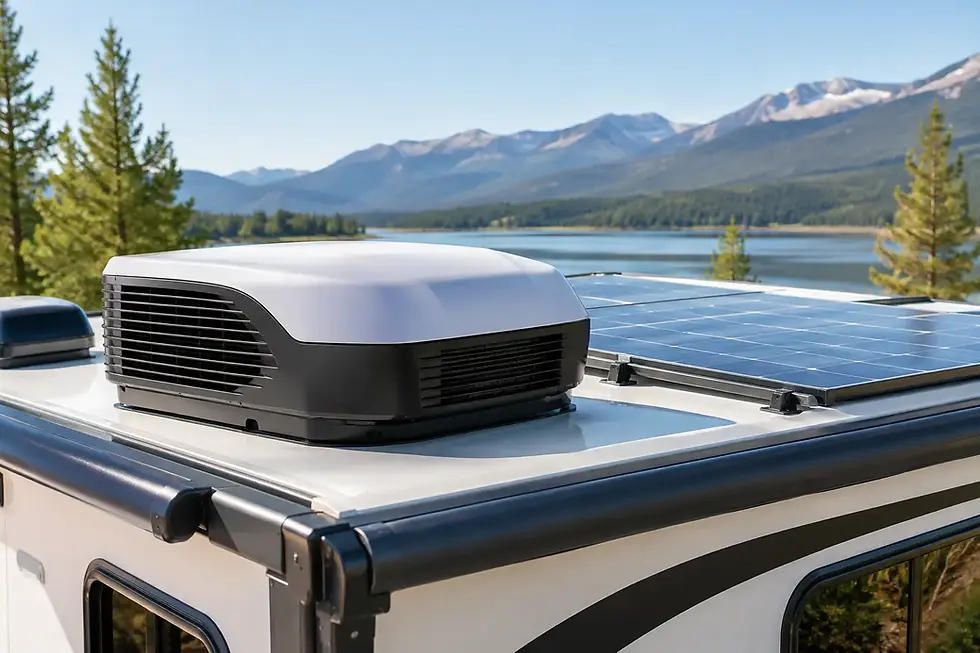
High-wattage appliances change the system design quickly. A coffee maker or microwave may only run briefly, but the inverter and battery bank must be able to deliver that power without excessive voltage drop. Air conditioning is a separate conversation. Running an AC unit from batteries and solar can be possible with the right equipment, but runtime depends on battery capacity, solar harvest, outside temperature, insulation, shade, and how long you expect the unit to run.
That is why a neat installation begins with requirements. Before choosing equipment, write down which appliances must work, how long you camp without hookups, whether you travel in hot climates, and whether quiet overnight operation matters more than extended AC runtime. Those answers determine the right battery bank, inverter capacity, solar array, charge controller, and charging strategy.
BLM Camping Rewards Self-Contained RVs
BLM dispersed camping can feel like the freedom many RV owners bought their rigs for. You may find wide-open views, room between neighbors, and a basecamp close to trails or public land recreation. The trade-off is that you are generally responsible for every utility and every trace you leave behind.
Arrive with full fresh water, empty waste tanks, charged batteries, and enough food to avoid an unnecessary drive into town. Choose durable ground and an established area when possible rather than creating a new track or clearing a new site. Keep your setup compact. A long line of cords, mats, gear, and outdoor equipment can make a short stay look more permanent than it is.
Solar performs best with direct sun, but the best campsite is not always the sunniest one. In hot weather, shade can reduce interior temperatures enough to lower your air-conditioning demand. In colder weather, open sun may be worth more than shade. Consider the season, the battery state of charge, and your planned departure time instead of parking solely for panel output.
Generator etiquette matters, too. Even where generator use is allowed, quiet hours and neighbor distance still matter. A well-sized lithium battery bank and inverter can cover many evening loads silently, which is one of the strongest advantages of an off-grid electrical system. Run louder charging equipment only when it is genuinely necessary and permitted.
City Parks Require a Different Kind of Courtesy
City park overnight stays are often a community courtesy, not a guaranteed camping destination. Some towns welcome self-contained RV travelers because they support local restaurants, fuel stops, and small businesses. Others limit overnight stays, require advance permission, or allow them only in a designated area.
If an overnight stay is permitted, keep it simple. Park where directed, avoid extending slides or setting out a campsite unless the park specifically allows it, and leave early enough to respect the intended short-stay purpose. Do not dump tanks, wash equipment, or use park restrooms as though they are a private campground amenity.
A quiet solar setup is especially valuable in these locations. You can prepare breakfast, charge devices, run necessary electronics, and keep refrigeration operating without bringing generator noise into a shared public space. That makes your stay easier on the town and helps preserve the option for the RVers who come after you.
Protect Your Battery Bank During Short Stays
Free camping can expose weak charging habits fast. Arriving late with partially charged batteries and hoping tomorrow's sun will solve the problem is not a reliable plan, especially in winter or under cloud cover. Solar production varies by season, weather, panel angle, roof obstructions, and location.
Use battery monitoring to understand your real energy use rather than guessing from a basic voltage reading. A good monitor helps you see whether the refrigerator, inverter standby draw, furnace, or entertainment equipment is consuming more than expected. It also helps you know when to conserve before the battery bank reaches a level that creates unnecessary stress.
Inverter settings matter as much as inverter size. Leaving an inverter on continuously can create an idle draw that adds up over several days. Some owners benefit from using inverter power only when needed, while others need it active for equipment that must remain powered. The right approach depends on your appliances and travel habits.
If your rig has alternator charging, shore-power charging, solar, and possibly a generator, think of them as a complete charging plan rather than separate upgrades. Solar may handle your typical sunny-day needs, while alternator or shore charging provides a dependable reset when travel or weather does not cooperate.
Plan for Water, Waste, and Weather Alongside Power
Electrical independence does not solve a full gray tank or an empty fresh tank. Water is often the real limit on a remote stay, particularly when multiple people are showering, cooking, or doing dishes. Conservative water habits extend your options, and knowing your tank levels prevents a convenient overnight stop from becoming a rushed search for a dump station.
Weather deserves the same attention. Wind can make a wide-open BLM site uncomfortable. Heavy rain can turn otherwise firm ground into a problem, while desert heat can raise cabin temperatures faster than your solar system can recover the energy used for cooling. Check conditions, identify an exit route, and do not park where water naturally collects.
A good off-grid setup gives you choices, not immunity from changing conditions. Sometimes the smart move is to use a campground hookup, top off the batteries, refill water, handle laundry, and head back out refreshed.
Build a System Around the Way You Travel
The most capable RV solar systems are not defined by a single panel count or a battery label. They are designed around your real loads, the climates you visit, your preferred camping rhythm, and the comfort you expect when hookups are unavailable. A traveler who spends one night between destinations needs something different from a full-time RVer who regularly stays remote for a week.
At Power Up RV Solar, that planning starts with the questions that matter: What do you run every day? Do you need air conditioning off-grid? How many days do you want to stay put? What charging sources are already installed? A custom system should make those answers feel practical, not complicated.
The best free campsite is the one you can leave exactly as you found it, with enough stored energy to enjoy the evening and enough confidence to choose tomorrow's route on your own terms.


Comments