


RV Electrical Load Audit Guide for Off-Grid Power
A residential refrigerator cycling through a hot afternoon, a laptop charging at the dinette, and an air conditioner starting after sunset can tell you more about your power needs than a solar package ever will. An RV electrical load audit guide starts with how you actually live in your rig, then turns those habits into a system built for the places you want to camp.
The goal is not to collect the biggest battery bank or cover every available inch of roof with panels. The goal is dependable power: enough battery capacity to get through the night, enough inverter capacity to run the loads you expect, and enough solar harvest to recharge between stops. That balance changes for a weekend camper, a remote worker, and a full-time traveler chasing public land and dispersed campsites.
What an RV Electrical Load Audit Really Measures
A load audit records the electrical equipment you use, its power draw, and how long it runs. From there, you can estimate daily energy use in watt-hours. Watt-hours are more useful than appliance wattage alone because a 1,500-watt microwave used for five minutes has a very different impact than a 150-watt refrigerator compressor running throughout the day.
Your audit should also separate AC loads from DC loads. Air conditioners, microwaves, coffee makers, televisions, and most household outlets run on 120-volt AC power through an inverter or shore power. Water pumps, vent fans, lights, furnace blowers, and many refrigerators commonly use 12-volt DC power. Both consume battery energy when you are off-grid, but they affect inverter sizing and wiring requirements differently.
A good audit goes beyond a spreadsheet total. It identifies peak demand - the equipment that may run at the same time - and daily consumption - the total energy used over 24 hours. A system can have plenty of stored energy but still fail to start an AC unit if the inverter cannot handle the startup load. It can also have a large inverter but inadequate battery capacity for a long evening of normal use.
Start With Your Camping Pattern
Before listing appliances, define where and how you camp. This is the part generic recommendations miss.
If you move every few days and camp mostly in sunny desert country, solar can do much of the daily recovery work. If you stay under trees, travel during short winter days, or spend several days in one location, the battery bank and charging strategy need more margin. Shore power availability matters too. Someone who spends part of the year in RV parks may want a system focused on quiet overnight capability, while a traveler who avoids hookups may need greater autonomy.
Think through the questions that affect every equipment decision: Do you need air conditioning while boondocking? Do you work from the road and depend on computers, monitors, cellular equipment, or Starlink? Do you cook electrically, or do propane appliances cover most meals? How many days do you want to stay put before needing to recharge from shore power or another source?
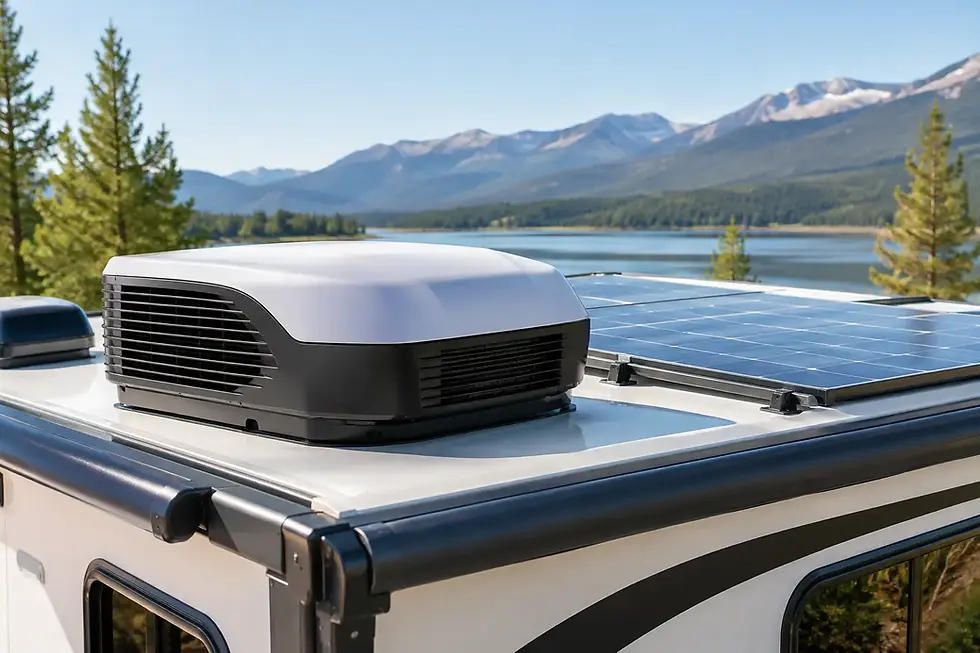
There is no universal right answer. A system designed for charging phones, running lights, and keeping a compressor refrigerator cold will look very different from one meant to support a Furrion Chill Cube AC, induction cooking, and a full remote-work setup.
Build Your Appliance List
Walk through your RV at a normal time of day and write down every device that uses electricity. Do not rely on memory. Small loads are easy to overlook, and several small loads running all day can become meaningful.
For each item, record its rated watts or amps, voltage, and estimated daily runtime. The manufacturer label, owner manual, or a plug-in watt meter can provide a starting point. A meter is especially useful for 120-volt appliances because real-world draw often differs from the number printed on the label.
Include the obvious items: refrigerator, microwave, coffee maker, television, water pump, lights, fans, furnace blower, CPAP machine, and chargers. Then look for the loads that quietly stay on: internet hardware, satellite receivers, pet equipment, tank heaters, heated blankets, security cameras, and inverter standby consumption.
For an AC appliance, daily watt-hours are calculated as watts multiplied by hours of use. A 100-watt laptop charger used for three hours consumes about 300 watt-hours. For DC equipment listed in amps, multiply amps by volts and hours. A 12-volt fan drawing 2 amps for eight hours uses roughly 192 watt-hours.
These are planning estimates, not laboratory measurements. Add realistic usage, especially for appliances with compressors, heating elements, or variable-speed motors. Refrigerators and air conditioners cycle. Their average consumption depends heavily on outdoor temperature, insulation, thermostat settings, sun exposure, and how often doors are opened.
Identify Your High-Draw Loads
High-draw appliances deserve their own attention because they shape the inverter, battery bank, and cable design. Air conditioning is usually the largest single consideration. Microwave ovens, hair dryers, toaster ovens, electric kettles, portable heaters, and induction cooktops can also pull substantial power, even when used briefly.
Do not look only at running watts. Motors and compressors can require a higher startup surge. A properly selected inverter must handle that surge without shutting down, and the battery bank must deliver the required current safely. This is why an air conditioner question cannot be answered by panel count alone.
It also helps to be honest about simultaneous use. If the coffee maker runs while the microwave is on and someone starts the air conditioner, those loads stack. You may decide that managing appliance use is acceptable. Many RVers are perfectly happy to turn off the coffee maker before using the microwave. If you want household-style convenience with fewer compromises, the electrical system needs to be designed for that expectation.
Turn the Audit Into Battery Capacity
Once you have estimated your daily watt-hours, decide how much stored energy you need when solar production is low. Lithium batteries are popular for off-grid RV systems because they provide useful capacity, charge efficiently, and handle repeated cycling well when installed with the correct protection and charging equipment.
Battery capacity should account for more than one sunny day. Weather changes, shade happens, and late-day arrivals do not leave much time for solar recovery. A traveler who uses 2,500 watt-hours per day may be comfortable with a battery bank that covers one night and recharges quickly the next day. Someone who plans to remain off-grid through cloudy conditions may want substantially more reserve.
Battery voltage affects the math and the hardware. At 12 volts, high-wattage inverter loads require high current. Larger systems may benefit from a 24-volt or 48-volt architecture because it reduces current and can simplify certain wiring demands. The best choice depends on total load, available equipment space, existing RV electrical infrastructure, and the desired inverter capacity.
Size Solar for Recovery, Not Just a Sunny Day
Solar panels replace energy used from the battery, but rated panel output is not the same as daily harvest. Heat, roof angle, shading, wiring losses, weather, and season all reduce production. A flat-mounted RV solar array is practical for travel, yet it will not produce its nameplate rating for every hour of daylight.
Start with your expected daily energy use, then consider where you travel. Arizona winter sun and humid summer conditions in the Southeast create very different production patterns. Roof space may also limit the array, particularly when air conditioners, vents, antennas, and other equipment occupy valuable real estate.
This is where trade-offs become clear. If the roof cannot support enough panel capacity to fully recharge after high AC use, you may choose a larger battery bank for overnight comfort while planning shore power or supplemental charging for recovery. If you rarely use high-draw appliances, a moderate array and battery bank may provide excellent independence without overbuilding the system.
Do Not Forget Charging and Monitoring
An audit is only useful if the system can charge correctly and show you what is happening. Solar charge controllers must match the array and battery configuration. Shore-power charging needs to support the battery chemistry and capacity. Existing alternator charging may require upgrades if you want meaningful charging while driving.
Remote monitoring turns estimates into useful information after installation. Battery state of charge, solar harvest, inverter load, and charging status help you spot patterns quickly. You may learn that your refrigerator uses more power during a certain season, that a fan is running longer than expected, or that an AC evening requires a different recharge plan the next day.
When a Professional Review Helps
A basic load audit is something every RV owner can begin, but design details matter when air conditioning, large inverters, lithium battery banks, or multiple charging sources enter the picture. Cable sizing, overcurrent protection, battery management integration, transfer switching, and ventilation all affect safety and performance.
At Power Up RV Solar, the most useful starting point is not a predetermined package. It is a clear picture of your appliances, existing equipment, travel style, desired runtime, and the level of comfort you expect off-grid. That information makes it possible to build a neat, serviceable system that supports the way you travel.
Take your audit on your next trip and write down what actually runs after sunset, what you avoid using, and what you wish worked without a second thought. Those notes are the beginning of a power system that lets you cut the cord and keep exploring.


Comments