

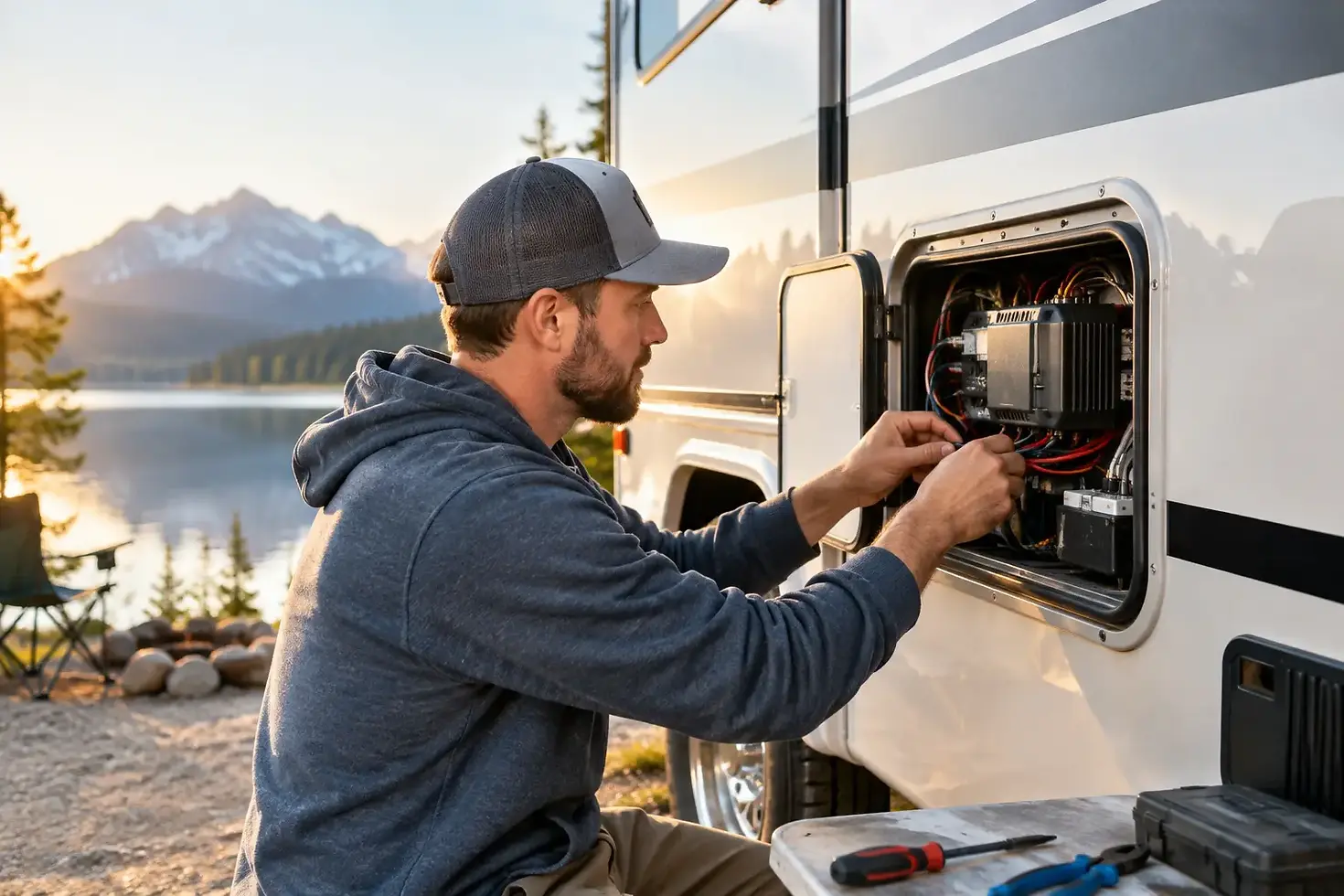
RV Soft Start Installation for Easier Camping
The first time an air conditioner tries to start on a small generator or limited campground power, the result can be familiar: lights flicker, the generator bogs down, and the breaker may trip before cool air ever reaches the coach. An RV soft start installation reduces that hard startup surge, making air conditioning more practical when your available power is limited.
For travelers who spend time away from full-hookup sites, a soft start is one of the most useful comfort upgrades available. It does not create additional power, and it is not a replacement for a correctly designed battery, inverter, solar, or generator system. What it does is help your existing air conditioner use the power you have more intelligently during the brief but demanding moment when the compressor starts.
What an RV Soft Start Actually Does
Your RV air conditioner needs a high inrush of current to start its compressor. That startup demand can be several times higher than the running load. Once the compressor is operating, its power draw settles down, but that first second or two is where undersized generators, weak shore connections, and overloaded systems often struggle.
A soft start module manages the compressor's startup sequence. Rather than allowing the compressor to demand its full surge instantly, it ramps that demand in a more controlled way. The reduction in startup current can make the difference between a successful start and a tripped breaker.
That matters when you are connected to a 15-amp household outlet, sharing a 30-amp pedestal with other loads, or operating from a generator. It can also reduce the stress placed on electrical components over repeated air conditioner starts. For full-time RVers and frequent travelers, those starts add up quickly.
A soft start is especially helpful for an RV with one roof air conditioner and a modest generator. It can also be part of a larger electrical plan for a rig with multiple AC units, lithium batteries, an inverter, solar charging, and a generator. The right answer depends on the air conditioner model, the number of units, your expected camping conditions, and what else needs to run at the same time.
Before You Schedule RV Soft Start Installation
A good installation begins with the actual load, not a guess based on the size of the RV. Two similar-looking motorhomes can have very different needs. One owner may only need to start a single AC while the microwave, water heater, and battery charger are off. Another may work remotely, run residential refrigeration, charge batteries aggressively, and need one or two air conditioners during hot-weather travel.
Before selecting a soft start, identify the air conditioner make and model, the electrical service in the rig, and the power sources you plan to use. The most useful questions are practical ones:
Will you use a generator, a campground pedestal, or both?
Do you have one air conditioner or multiple units?
Is your rig equipped for 30-amp or 50-amp service?
Which appliances must run while the AC starts?
Are you building toward battery-powered air conditioning through an inverter and lithium bank?
The answers determine whether a soft start is a focused AC upgrade or one component in a broader energy system. A soft start may allow a generator to start an air conditioner reliably, but it will not make a low-output generator capable of carrying an AC plus electric water heating, a microwave, and a heavily charging battery bank all at once.
It is also worth checking the condition of the air conditioner before adding any startup device. Dirty condenser coils, a failing capacitor, loose wiring, restricted airflow, or a compressor already struggling to start can create problems that a soft start cannot fix. Solve mechanical and maintenance issues first.
Where the Soft Start Module Is Installed
Most RV soft start modules are installed inside the air conditioner's electrical compartment, typically under the rooftop shroud. This puts the module near the compressor wiring and factory capacitors it needs to work with. The location is compact, but access can be awkward, and the wiring must be routed and secured carefully to avoid vibration, heat, or contact with sharp metal edges.
The installation usually requires removing the AC shroud, opening the electrical control box, identifying the correct compressor, capacitor, and common wiring terminals, then connecting the module exactly as specified by its manufacturer. Some units need to go through a learning process over several compressor starts. During that process, the module measures and adapts to the characteristics of that particular air conditioner.
The details matter. Wire colors are not always consistent across air conditioner models, and previous repairs may not follow factory conventions. A neat installation includes properly secured wiring, protected connections, a reinstalled weather-resistant cover, and a functional test under real load. The goal is not merely to fit a small box under the shroud. The goal is dependable compressor starts when you are parked far from a convenient repair shop.
Why Professional Installation Can Be Worth It
A capable owner with electrical experience can install some soft start models, provided they follow the manufacturer instructions and safely isolate all power. But rooftop AC wiring is not a place to improvise. Shore power, generator power, inverter output, and battery charging systems can all be part of the same electrical picture.
Before work begins, every source of AC power needs to be disconnected. That means unplugging shore power, shutting down the generator, disabling inverter output if applicable, and verifying that the air conditioner circuit is dead. Capacitors can retain a charge, so they should be treated with care even after power is removed.
Professional installation also makes sense when your RV electrical system has been upgraded over time. Added solar, lithium batteries, a high-capacity inverter, automatic generator functions, or an energy management system can affect how and when loads are supplied. A technician can verify that the soft start supports your intended use without overlooking a larger limitation elsewhere in the system.
At Power Up RV Solar, that requirements-first approach is central to planning. If your real goal is quiet overnight cooling, the conversation should include battery capacity, inverter capability, charging recovery, AC runtime expectations, and travel habits. If the goal is simply to stop tripping a generator while cooling down after a hike, the system design may be much more straightforward.
Testing the System After Installation
A soft start should be tested with the power source you expect to use in the field. Start by verifying normal operation on shore power. Then, if you travel with a generator, test the AC with the generator warmed up and with unnecessary loads switched off. Listen for a clean compressor start and watch for voltage drop, breaker trips, or error codes.
After the learning cycles are complete, test realistic combinations. Can the AC start while the refrigerator is operating? What happens when the battery charger is active? If you have two air conditioners, does your electrical service and generator support the startup sequence you expect? These checks are more valuable than assuming the module solves every power constraint.
Keep in mind that hot weather changes the equation. An AC compressor under heavy heat load can draw more running power than it does on a mild day. High altitude can also reduce generator output. A setup that works perfectly on a cool morning near sea level may need better load management during a hot afternoon in the mountains.
Soft Start Installation Is Part of Smart Load Planning
A soft start gives you more flexibility, not unlimited capacity. The best results come from managing loads intentionally. Turn off the electric water heater element before starting the AC. Let the battery charger reduce its demand if generator capacity is tight. Avoid starting the microwave at the same moment the compressor cycles on.
For off-grid travel, this becomes part of a larger habit: know your loads, know your available power, and build the system around the way you actually camp. A properly installed soft start can turn an unreliable AC startup into a routine part of your day, leaving you free to choose the campsite for the view instead of the nearest power pedestal.


Comments